

MK College and Thames Valley Police: Working together for safer campuses
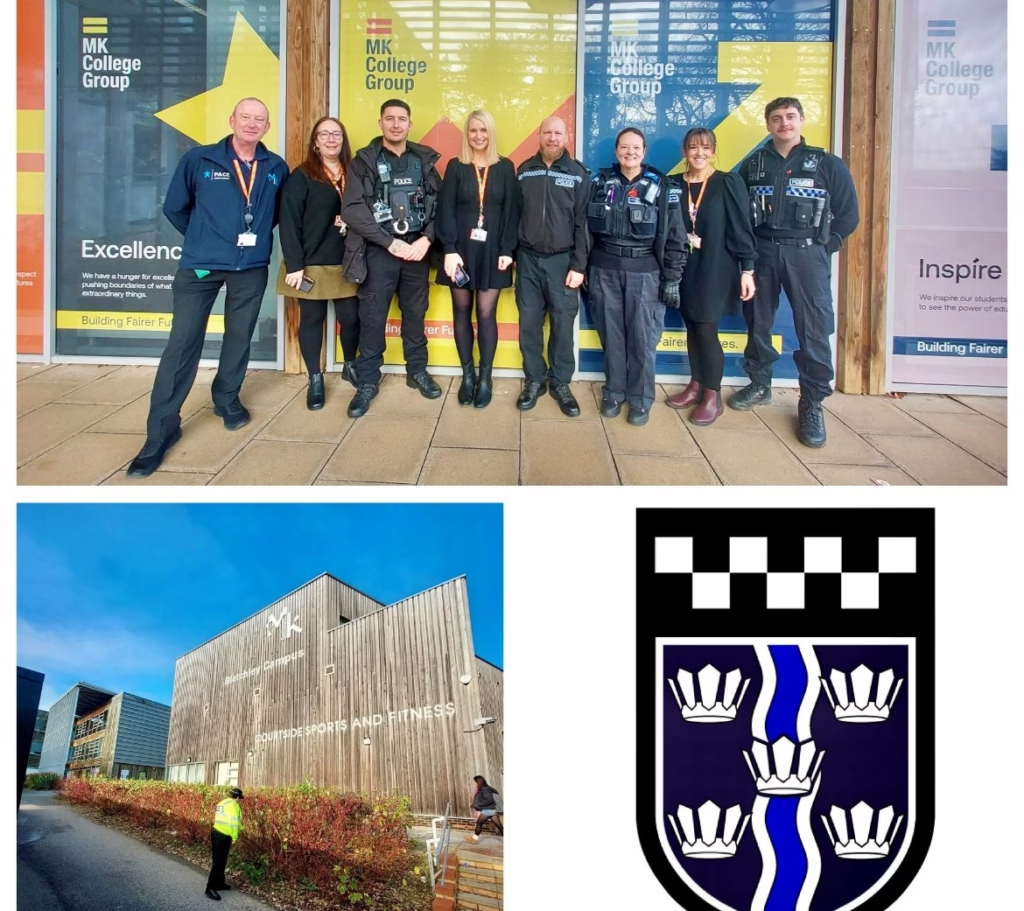
In this blog, Amy Langford, MK College Group’s Director of Inclusion and Safeguarding Lead, discusses the College’s partnership with Thames Valley Police and how this supports student development, safety and wellbeing.
Why is having a strong relationship with the Police important?
From the College’s perspective, it is essential to have strong partnerships with our local health, psychiatric and social services and the Police. These relationships are valuable for ensuring that students are safe and their needs understood and to help our students develop an understanding of their civic responsibilities and the role they play in keeping themselves and others safe.
We have well-established working relationships with several teams within Thames Valley Police. These include high-level, direct links and close collaboration school and neighbourhood teams local PCSOs.
Through this partnership, the Police support the College’s proactive work in tackling hate crime and violence against women and girls. This also helps in strengthening our lockdown procedures, ensuring they remain fit for purpose. We have welcomed Police representatives to meetings to share updates on the various workstreams they are delivering to support and engage young people. It was also through the Police that we became aware of White Ribbon Campaign and engaged with the It Does Matter campaign.
Are there any specific Police campaigns or projects the College has been involved with?
For at least five years, the Police had been bringing screening arches onto campus as part of the successful Op Deter project, aimed at preventing knife crime. In summer 2023, we decided to introduce knife arches permanently across all four campuses because we felt the impact had been positive and that students reported that these made them feel safer. Alongside this, we began running classroom workshops and talks in shared spaces to raise awareness of the risks of carrying a knife. We wanted to create something more lasting and enable consistent, open conversations with students offering them a platform to discuss any concerns.
As part of the initiative, we worked closely with the Police, Arthur Ellis Mental Health Support and other local stakeholders. We also carried out an Equality Impact Assessment to ensure that installing the knife arches was the right approach. We recognised that it might cause increased anxiety in the first instance but our long-term aim has always been to create a stronger sense of safety for everyone on campus and to promote open conversations.
We also support Opt Sceptre – a national week of action to tackle knife crime that takes place annually in November across police forces in England and Wales.
How else does the partnership with the Police benefit the College?
The Police are very supportive of our work, including attending student events such as Welcome Week. We also regularly attend their panels and events, such as their knife crime summit, which I spoke at a few years ago.
It is a reciprocal relationship that benefits both parties and creates a sense of cohesion. Their responsiveness is consistently high; if we have any concerns they work with us to explore how best to address them. This collaboration is positive for students, as it helps to build trust and reinforces a sense of safety on campus.
Do you have any events coming up in partnership with the Police?
The College is hosting an event later in January aimed at addressing young people’s perceptions of the Police by breaking down misconceptions and stereotypes. The interactive event is a collaboration between employers, the Police and one of the anchor partners of the South Central Institute of Technology (IoT), Digital Skills Consulting.
Around 50 students will spend a day working with the Police, beginning with open conversations in the morning and later being tasked with developing digital solutions to issues that affect them directly. The project aims to build trust between young people and the Police by helping them to understand the positive impact they can have on their communities and their futures.